
SMS marketing for ecommerce is the highest-intent channel a store has. A shopper who left their phone number wants to hear from you — and a text gets read in minutes, not buried in a promotions tab. The money lives in a handful of flows: abandoned-cart recovery, launches and drops, back-in-stock alerts, shipping updates, VIP and loyalty perks, and win-back. This guide is the playbook for running all of them, compliantly.
Postscript's 2026 benchmark report, drawn from 17,000+ Shopify stores, puts abandoned-cart text revenue between $3.52 and $10.95 per message sent — one of the best dollar-per-send numbers in marketing. This is PitchPrfct's blog, so we build the SMS software. But the playbook here works on any platform that does texting right.
Why texting beats the inbox for ecommerce
Email still has a job. But SMS marketing wins the moments that decide a sale, on speed and attention:
- It gets read. Texts open at roughly 98% and most are read within minutes. A cart reminder that lands while the shopper is still on the couch converts; one that sits unread until tomorrow doesn't.
- It's event-driven. Cart abandoned, item back in stock, order shipped, VIP tier unlocked — these are timed moments, and a text hits them the instant they happen.
- It's personal. A short, named text reads like a heads-up from the brand, not a banner ad. That's why the opt-in shopper replies.
- It compounds. A clean, consented list of past buyers is an asset you own — not a feed you rent. Every launch and restock reaches it for $0.007 a segment.
The flows that make the money
Don't think "send a blast." Think flows — sequences triggered by what a shopper does on your store. These six carry almost all of the revenue.
1. Abandoned-cart recovery
The workhorse. A shopper adds to cart, leaves, and a timed text pulls them back. The first touch lands best inside 15–30 minutes, while intent is hot; a second nudge the next day, sometimes with a small incentive, catches the rest. This is where abandoned cart SMS earns its $3.52–$10.95 per message.
2. Launches and drops
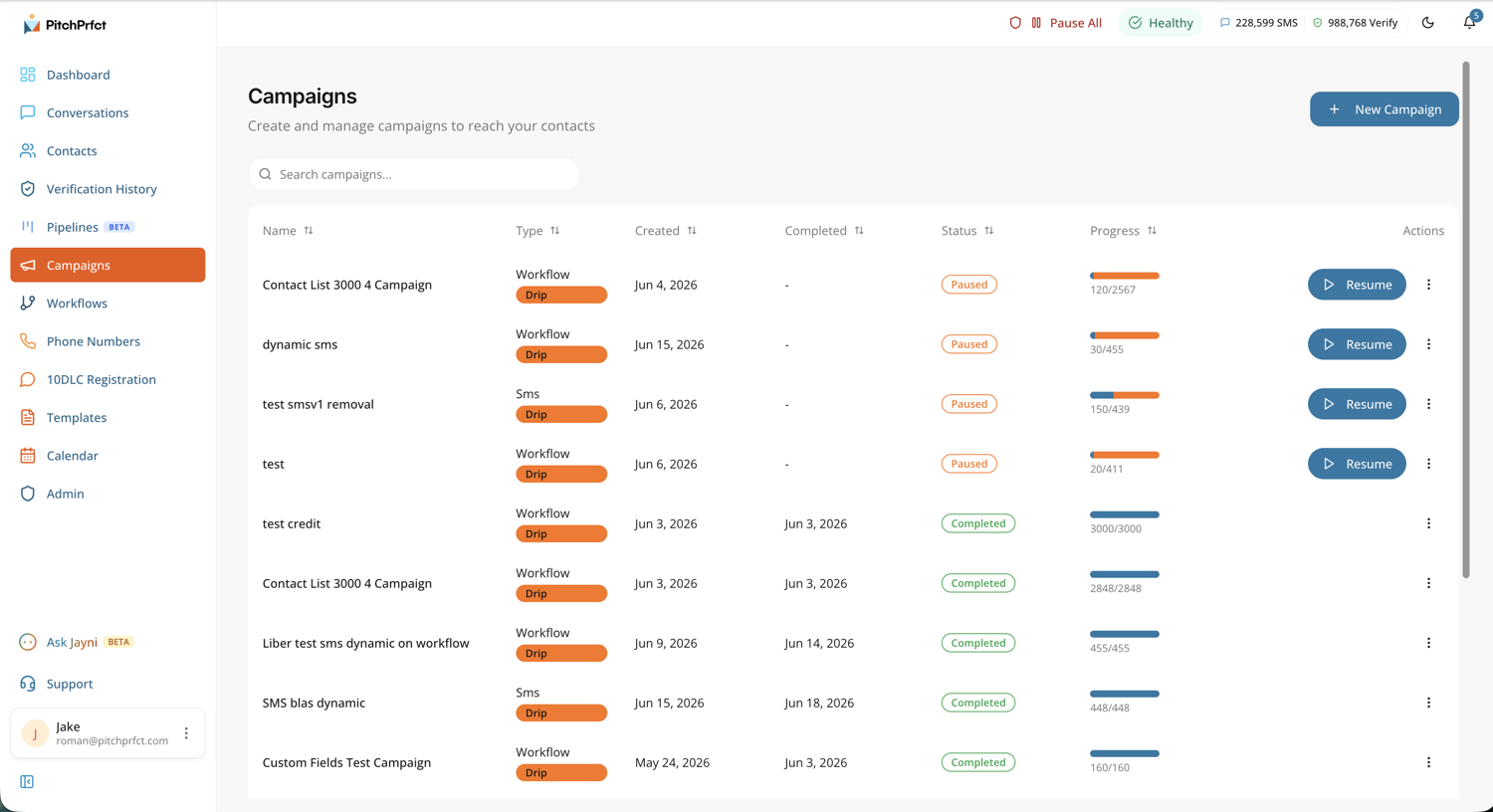
A list of buyers who opted in is the cheapest, fastest channel for a new product or a limited drop. One SMS campaign to the segment that bought your last release does more than a week of paid social — and it costs cents. Build urgency honestly: "live now," "limited run," a real cutoff.
3. Back-in-stock alerts
Pure intent. Someone wanted the item enough to ask to be told when it returns. A single text — "the {{product}} you wanted is back" — converts at rates a cold promo never will. Trigger it off the restock event and it sends itself.
4. Shipping and order updates
Transactional texts are the most-welcomed messages you send, and they build the trust that makes promotional texts work. Order confirmed, shipped, out for delivery — each is a reason to be in the shopper's phone without selling.
5. VIP and loyalty
Segment your best customers and treat the list like a club: early access to drops, a members-only code, a heads-up before the public sale. Exclusivity is the whole point — if everyone gets the VIP text, no one's a VIP.
6. Win-back
A buyer who hasn't ordered in 60 or 90 days isn't gone — they're dormant. A timed win-back text ("we miss you, {{name}}") with a reason to return revives revenue you already paid to acquire. Trigger it off days-since-last-order.
Texts that get the tap
Compliance gets the message delivered; craft gets the click. What works in ecommerce:
- Say who you are. Lead with the brand so it's never a mystery text.
- One idea, one link. Under 160 characters, a single clear action.
- Personalize with merge fields — name, the product, the cart.
- Make urgency real. A true cutoff or low-stock note beats fake scarcity.
- Always include opt-out. "Reply STOP to opt out" — required, and it keeps the list clean.
Example ecommerce text scripts
- Abandoned cart: "Hi {{name}}, you left the {{product}} in your cart. Still want it? Here's your link to check out: {{link}}. Reply STOP to opt out."
- Back-in-stock: "Good news {{name}} — the {{product}} you wanted is back in stock. Grab it before it's gone: {{link}}"
- Launch / drop: "It's live, {{name}}. The {{product}} just dropped and the first run is limited. Shop early: {{link}}"
- VIP / loyalty: "{{name}}, VIP early access: shop the new collection 24 hrs before everyone else with code {{code}}: {{link}}"
Keep a small library of these so the moments that repeat are one click to send — see our SMS templates for more patterns. (Texting works the same way outside retail, too — here's the restaurant version of the same playbook.)
Compliance — get it right before flow one
Shoppers must opt in. No consent, no texting. Ecommerce SMS sits on top of the TCPA and carrier rules:
- Collect explicit consent. A checkout checkbox, a pop-up with clear text, a keyword opt-in — each must state the shopper agrees to receive marketing texts. Document it: timestamp and source. Don't pre-check the box.
- Register your 10DLC campaign. Carriers filter unregistered business texting. Registration is what gets your messages delivered at all.
- Honor STOP instantly and suppress that number permanently.
- Respect quiet hours — roughly 8 a.m.–8 p.m. in the recipient's local time, stricter where state "mini-TCPA" laws apply.
Ecommerce SMS works best with shoppers who raised their hand — the flows above are built around opted-in buyers, not bought or scraped lists. There are rules that govern business texting; for the specifics, go to the source: the FCC's texting rules and the CTIA Messaging Principles, plus our TCPA guide and 10DLC guide. We make SMS software, not legal advice — check the current rules for your situation.
How to wire it into your store
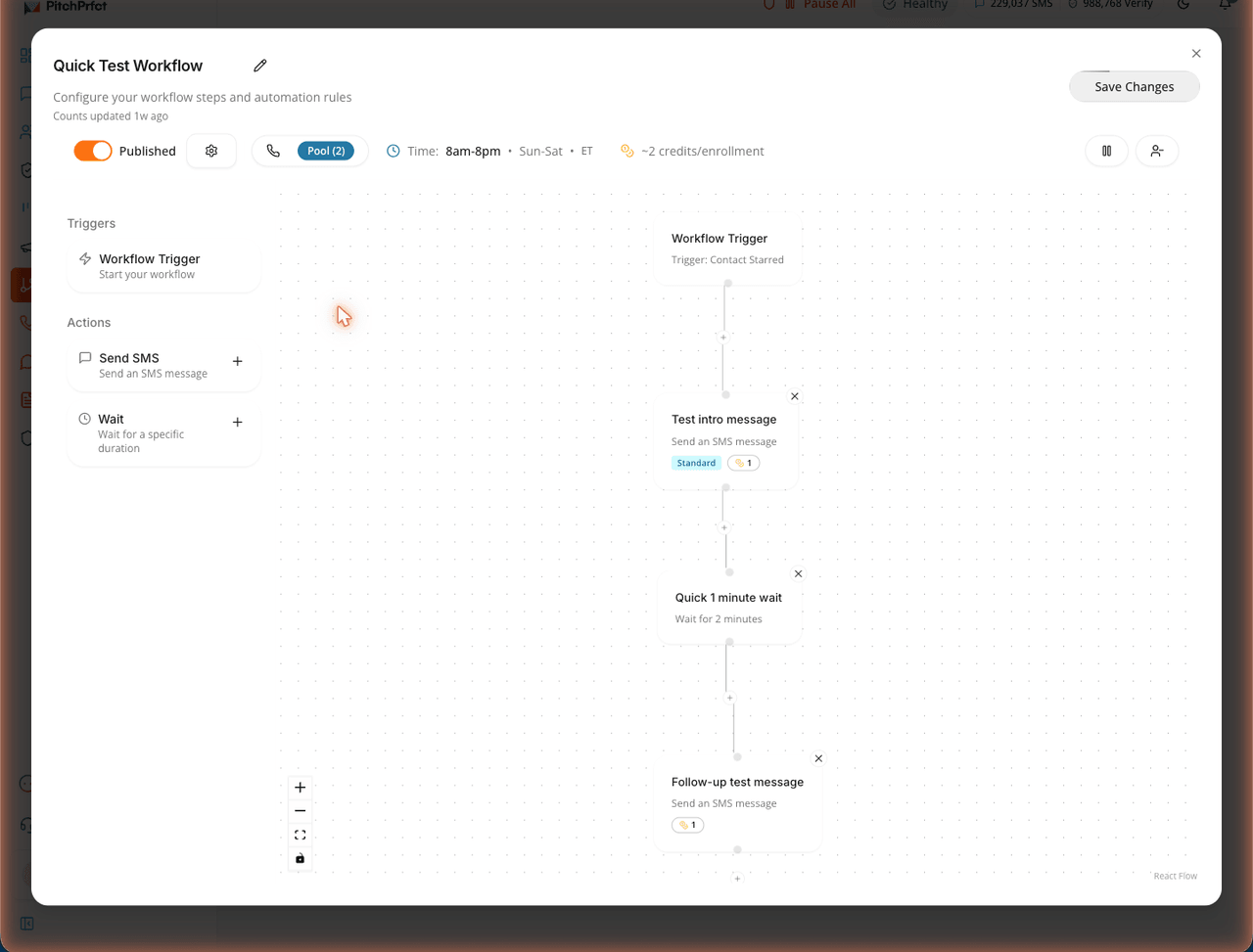
SMS is its own channel — PitchPrfct is SMS-first, not a bolt-on email suite. The trick is connecting your store's events to your texting so the flows fire on their own. Four ways in:
- Zapier and Make.com — no-code connectors for cart, order, and customer events from Shopify and most carts.
- REST API — for a direct, custom integration.
- Webhooks — push store events (cart abandoned, item restocked, order shipped) straight into a flow.
A "cart abandoned" event from your store kicks off the recovery sequence; an "order shipped" event fires the update; a "back in stock" event sends the alert. Once it's wired, the flows run untouched. See the full integrations & API breakdown for setup detail.
See the whole thing end to end:
Where PitchPrfct fits
PitchPrfct is a compliance-first SMS platform for any business that sells — ecommerce included:
- Built-in compliance: automatic opt-out (STOP) handling, quiet-hours enforcement, and list scrubbing, plus guided 10DLC registration.
- Flows + a conversations inbox: trigger cart, restock, and win-back sequences automatically; route replies to a real person.
- Flat, predictable pricing: $99/mo + $0.007 per segment, all-in (carrier fees included). Like any platform, $1/mo per number and the standard $10/mo TCR campaign fee apply on top — no credit buckets, no per-message surcharge, and credits roll over one month. See the full pricing breakdown.
- Built to connect: Zapier, Make.com, a REST API, and webhooks wire your store's cart and order events into your texting. And Jayni, our AI assistant, is live.
It's SMS-first by design — not a Shopify email-and-everything suite — so pair it with your store and email tool accordingly. For the texting layer that recovers carts and drives drops, it's purpose-built.
Frequently asked questions
Is SMS marketing worth it for ecommerce?
What's the best abandoned cart SMS strategy?
Do I need consent to send ecommerce text messages?
How does PitchPrfct connect to my Shopify store?
How much does ecommerce SMS cost?
Want cart-recovery and drop texting with compliance handled for you? Start a free trial.